What Counts as Learning? (Spoiler: Almost Everything!)
“Are they learning enough?”
It's one of the questions almost every homeschooling parent asks at some point.
Maybe it's after a week that didn't go to plan. Maybe the morning was spent gardening instead of doing maths. Perhaps you happily passed an afternoon baking muffins, reading on the couch or exploring a local walking trail.
Perhaps you've looked back on your day and thought, “It didn't feel much like we did much school today.”
But you know what? It probably felt a lot like learning.
For so long, we've been taught that learning happens inside four walls, sitting at a desk, surrounded by kids of the same age, following a timetable and completing worksheets. But homeschooling gives us the opportunity to rethink what education can look like. It gives us the chance to pause and think, what is learning? What is the point of learning? What are our goals towards learning?
Children are innately curious. A baby puts everything in their mouth, and a toddler marvels at what happens when they tip their breakfast out. A 5-year-old wonders how rainbows exist, and a 15-year-old tinkers to work out what’s wrong with their computer.
When children are curious, engaged, and connected to the world around them, learning happens everywhere.
This belief sits at the heart of everything we create at Simply Homeschool.
Our Core Programs aren't designed to separate learning from life. They're designed to get children out into the world – to notice, question, create, investigate and connect their learning to everyday life.
You'll find invitations to cook, build, experiment, explore nature, interview grandparents, create art, visit museums, volunteer in your community and have meaningful conversations around the dinner table.
Because some of the richest learning happens when a lesson extends beyond the page.
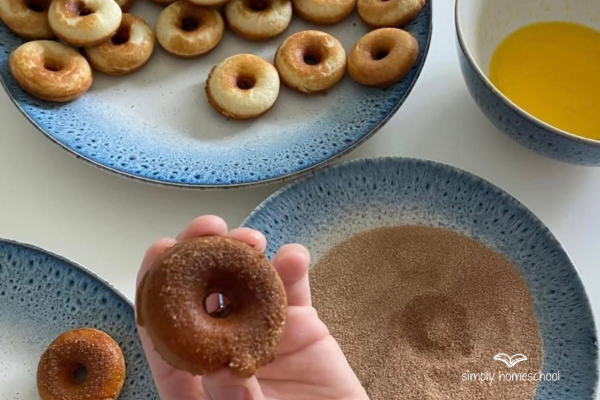
In the Kitchen
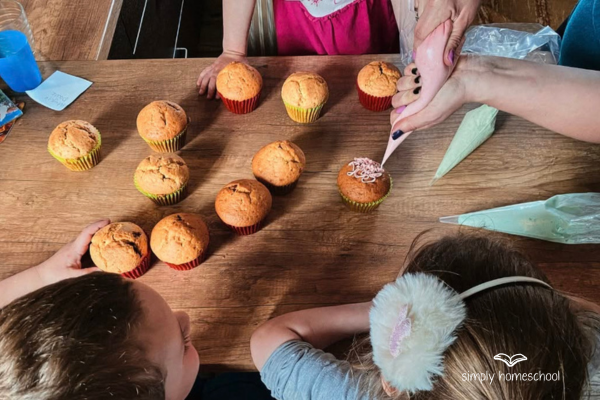
An afternoon of baking is full of learning.
Measuring ingredients, doubling recipes, reading instructions, timing the oven, and discovering why cakes rise and butter melts. Along with learning valuable life skills, children are also developing mathematical thinking, scientific understanding, literacy and problem-solving skills.
Children learn fractions without realising it. They practise reading for a purpose. They make predictions, observe changes and learn from mistakes.
And they usually end up with something delicious to share!
That’s why many Simply Homeschool Core Programs include cooking and practical life experiences. Learning becomes far more memorable when children can see, touch, taste and experience it for themselves.
At the Supermarket
The weekly grocery shop is a lesson waiting to happen.
Children can write shopping lists, compare prices, estimate totals, make informed choices based on a budget, calculate discounts, choose seasonal produce, and discuss where food comes from.
They develop financial literacy, mathematical thinking, geographical knowledge and healthy decision-making, all while helping fill the trolley.
Learning doesn't stop because you've left the house. And learning at the table isn’t necessarily more valuable than learning that happens in the community. Learning and life are intertwined. Out in the world is where children get to apply their learning to real-life situations.
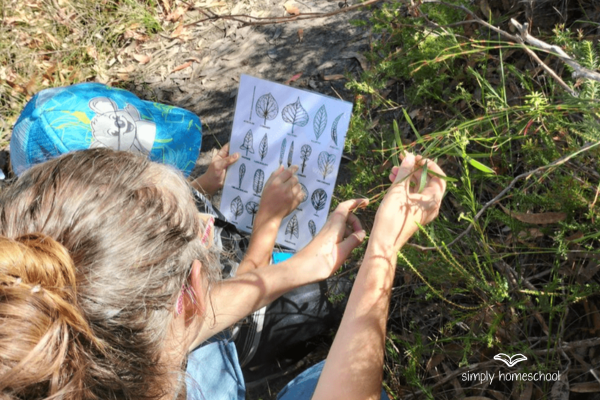
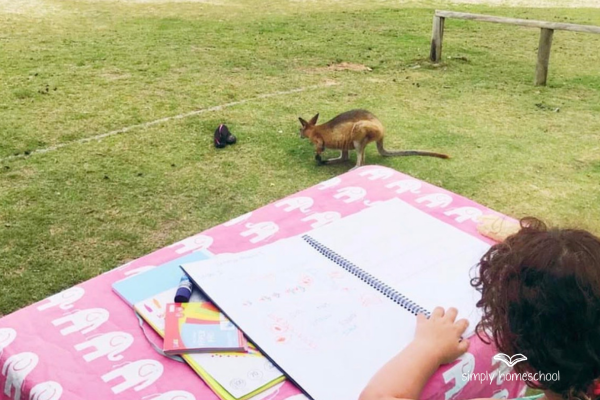
Outside in Nature
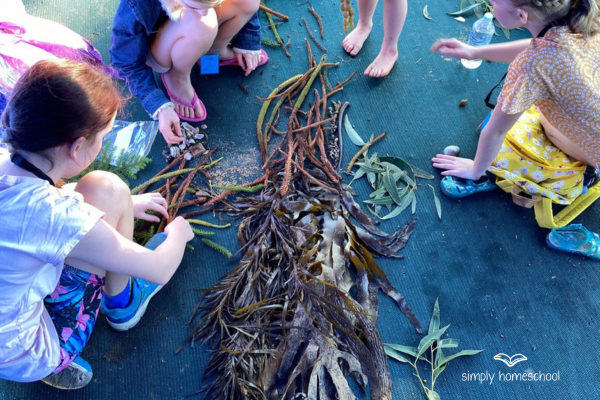
Watch a child in the backyard or on a bushwalk. They're collecting leaves, listening to birds, noticing insects, and wondering why mushrooms appear after rain.
This is science in its most authentic form — Observation, curiosity, and investigation.
Nature study appears throughout many Simply Homeschool Core Programs because we believe children develop a deeper understanding of the world when they experience it firsthand, not just read about it.
Our Cores invite children to nature journal, go for bushwalks, draw, paint and photograph nature, build fires, study mushrooms, observe plants growing, embrace the change in seasons, and so much more.
Good Books
A wonderful story rarely teaches just one subject.
A historical novel opens the door to history, geography and culture. A picture book inspires art, science or rich family discussion. A biography encourages resilience, empathy and perseverance.
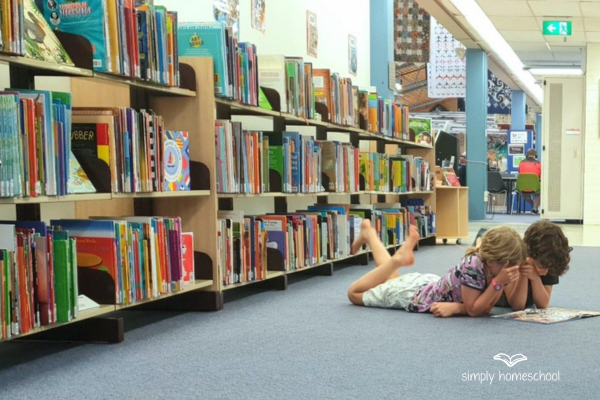
Good books invite children to ask questions, think critically and imagine possibilities beyond their own experiences. They invite readers into a world of beauty and wonder. Books help inspire and engage children in ways textbooks can’t.
That's why quality literature forms the backbone of so many Simply Homeschool Core Programs. Stories help children build knowledge while nurturing compassion, creativity and a lifelong love of learning. Reading aloud to our children is always time well spent.
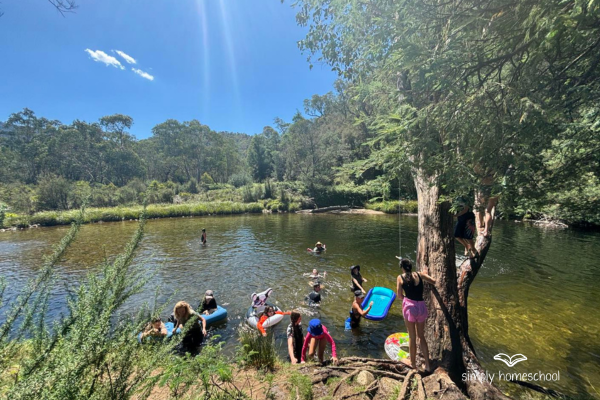
During Play
LEGO. Dress-ups. Board games. Puzzles. Cubby houses. Craft projects.
Play is often dismissed as “just playing”. Something children do before the important work of learning starts. Yet, while children play, they're planning, negotiating, experimenting, designing, communicating and solving problems.
They're developing executive functioning, creativity, resilience and confidence.
Play isn't a break from learning. Play is how children make sense of the world. It is learning.
And play isn’t just for young children. Our teens need time to play, too. They need time to tinker, experiment, explore their interests, take healthy risks, and mess around. Play allows our teens to create, imagine and dream. It helps them build resilience when things don’t go as planned and develop perseverance when they make mistakes. These are essential life skills.
Out in the Community
Learning comes alive when children connect with the people and places around them.
At a local market, they'll meet growers, artists, makers and small business owners.
Whilst volunteering together, they'll learn compassion, responsibility and service.
When visiting museums, galleries and historical sites, they'll discover that history isn't just something found in books – it's all around us.
Some of the most meaningful learning happens when children engage with the wider community.
Sports and Hobbies
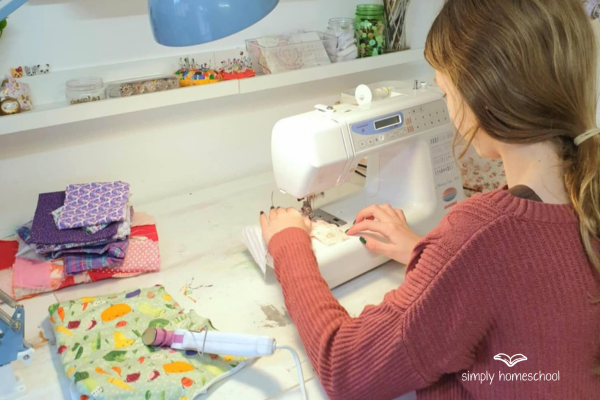
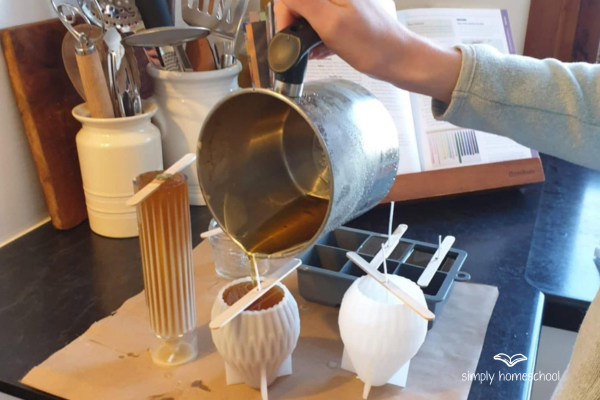
Whether it's basketball, dance, martial arts, gardening, music or woodworking, hobbies teach lessons that reach far beyond the activity itself.
Children learn perseverance, teamwork, goal-setting, resilience, self-discipline, and creative thinking. They discover that progress comes through practice, mistakes are part of learning, and success is rarely instant.
These lessons shape character as much as capability.
Around the Dinner Table
Some of the richest learning happens through conversation.
Talking about current events, sharing opinions respectfully, retelling the day's adventures, asking questions, and listening to different perspectives allow language, critical thinking, and communication to grow in these everyday moments.
Through conversations, children learn that sometimes the most valuable lesson isn't knowing the answer; it's learning how to ask thoughtful questions.
The Learning that can't be Measured
Not all learning can be seen. A lot of it emerges slowly. Qualities such as confidence, kindness, curiosity, independence, creativity and empathy.
So... are your children learning?
If your child is asking questions, reading, helping cook dinner, building with LEGO or playing outside, they are learning.
If they are creating art, exploring nature, visiting grandparents, helping at the shops, learning a new skill, making mistakes and trying again.
Then, yes. They are learning.
It may not always look like school, but perhaps that's exactly the point. It's woven into everyday life. It is life.
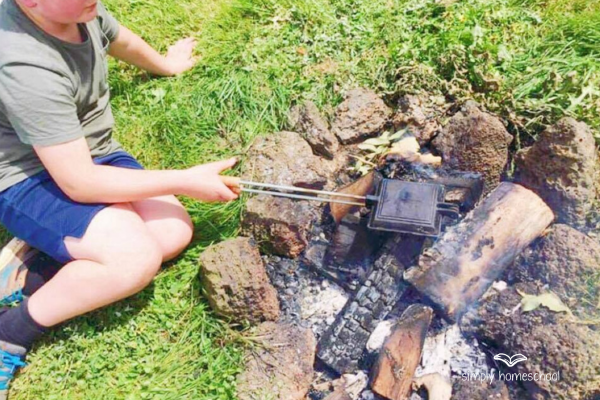
Our Core Programs are designed to embrace this philosophy by combining rich literature, meaningful projects, real-world experiences and hands-on activities work to help children make genuine connections between what they're learning and the world they live in.
We don't believe children need to choose between structure and freedom.
They can flourish with both.
A thoughtfully designed Core Program provides the guidance, confidence, and educational richness that families appreciate, while leaving plenty of room for rabbit trails, adventures, conversations, and spontaneous moments of discovery.
Learning and life. Intertwined.
So the next time you wonder whether you've done "enough", pause and look back over your day.
Did you read together? Cook something new? Go for a walk? Build something? Have a wonderful conversation? Wonder about the stars? Help a neighbour? Laugh together?
If so, you've probably accomplished far more than you realised.
Because when life becomes the classroom, almost everything counts.
..........